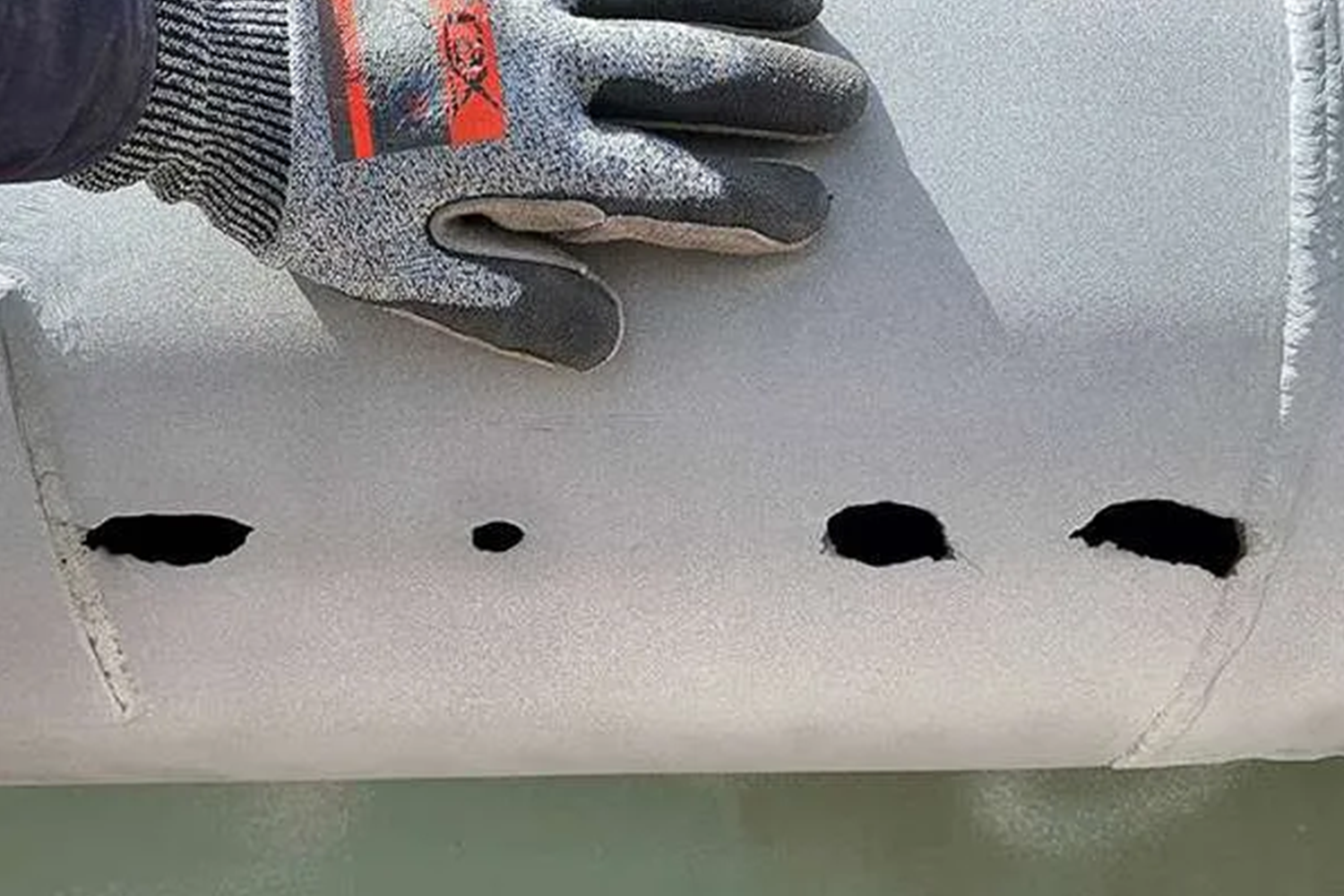
Corroded pipework operating at elevated temperatures presents a significant maintenance challenge, particularly where corrosion has resulted in thin wall or through-wall defects. Factors such as aggressive process media, thermal cycling, and restricted access often make conventional repair methods such as welding or pipe replacement costly, disruptive, and difficult to execute safely.

In these situations, high temperature epoxy solutions provide a practical, engineered repair solution. When combined with composite reinforcement systems, high temperature epoxy materials can be used to restore wall thickness, rebuild damaged areas, and provide long-term corrosion protection — without hot work and with minimal downtime.
Why High-Temperature Pipework Fails in the Mining Industry
In mining and smelting operations, pipework selection is driven by pressure, temperature, abrasion, and corrosion resistance. Carbon steel remains the dominant material for critical high-temperature mining pipework due to its high temperature and pressure resistance, strength and durability, cost-effectiveness and suitability for heavy structural applications.
However, carbon steel is susceptible to corrosion — particularly in the aggressive chemical and thermal environments found in smelting and processing plants. Over time, this leads to wall thinning and ultimately through-wall defects that compromise structural integrity and create safety risks.
Step-by-step Guide
This guide details the repair of corroded pipework using high temperature epoxy solutions, based on a real application on a steam condenser header operating in elevated temperature service at a nickel smelter.

The repair system selected comprised Belzona SuperWrap II composite wrap combined with pre-rolled doubler plates, cold bonded to the pipe using Belzona 1511 (Super HT-Metal) — a high temperature epoxy repair composite.
Surface Preparation
Both the doubler plates and corroded pipe repair areas were grit-blasted to achieve SSPC-SP10 / NACE 2 / Sa 2½ (Near White Metal) with a 3 mil (75 µm) anchor profile. All surfaces were then cleaned with a cleaner/degreaser to ensure optimal cleanliness prior to application.

Hole Patching — Belzona SuperWrap II
Belzona SuperWrap II reinforcing sheets were pre-cut and coated with Belzona SuperWrap II (1983 Resin). These layers were then applied to the affected areas of the header pipes and consolidated using a roller to eliminate air pockets and ensure full contact with the substrate.

Overcoating with Belzona 1593
After the Belzona SuperWrap II patches had reached the appropriate overcoating stage, Belzona 1593 — a high temperature epoxy coating designed to deliver long-term corrosion and chemical resistance under continuous immersion up to 160°C (320°F) — was applied over the patches to provide enhanced chemical protection.
Belzona 1593 is suitable for continuous immersion up to 160°C (320°F) and can withstand steam-out conditions up to 250°C (482°F) — making it one of Belzona's most capable high-temperature coatings for process vessel and pipework protection.
Cold Plate Bonding with Belzona 1511 (Super HT-Metal)
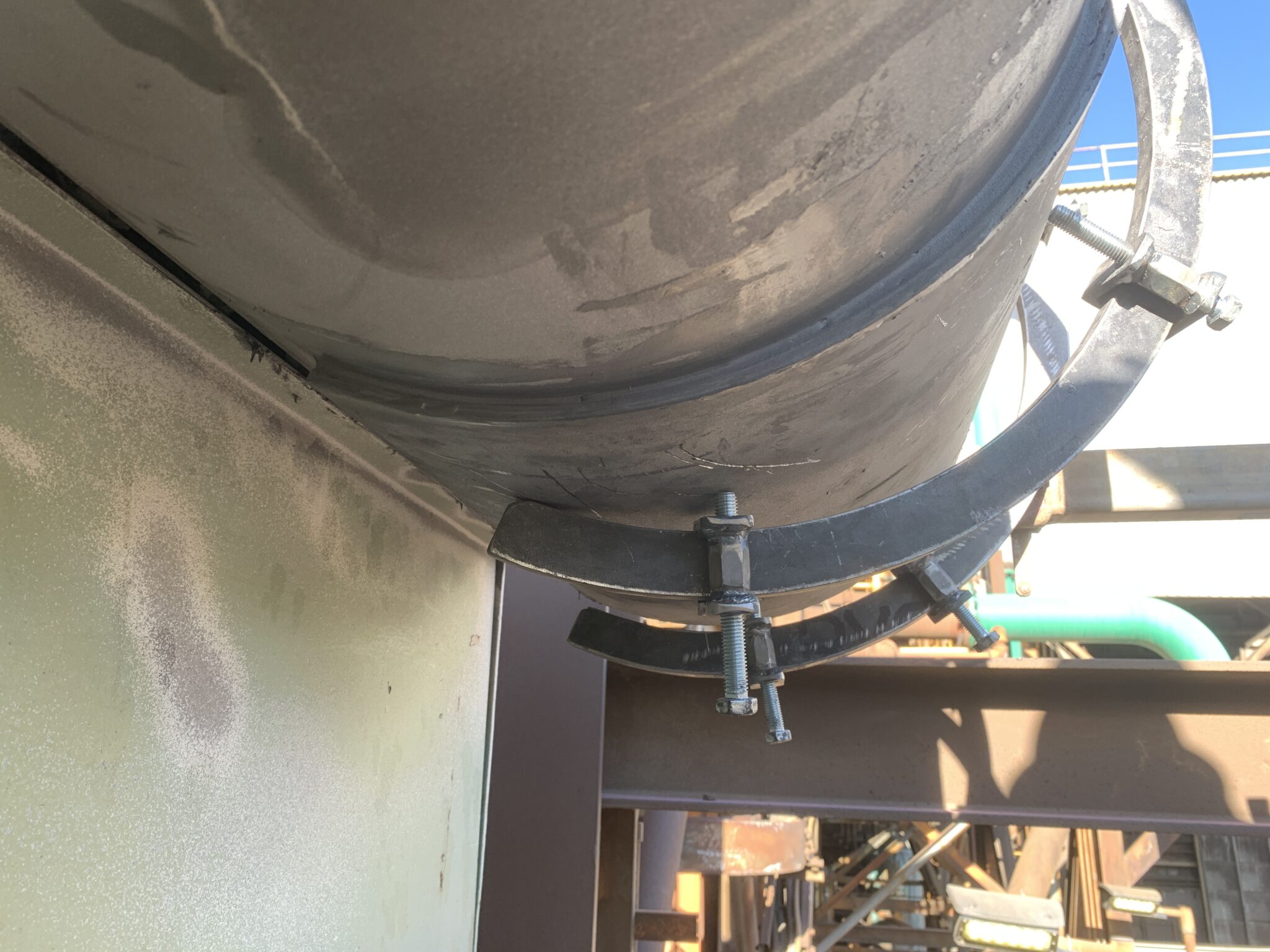
In other areas, doubler plates were applied and cold bonded using Belzona 1511 (Super HT-Metal) in addition to the SuperWrap II patches. Surfaces were thoroughly wetted out, and an additional layer of Belzona 1511 was applied to fill any pitting and restore the surface back to its original profile. The doubler plate was then pressed onto the pipe and held in place until the product cured.
Belzona 1511 (Super HT-Metal) is a high-temperature epoxy repair compound designed for metal repair and equipment rebuilding, offering excellent corrosion protection. Under immersion, it is suitable for applications up to 150°C (302°F).

The Result
The high temperature epoxy pipework repair was completed successfully, resulting in a durable, long-term solution capable of withstanding the required thermal and chemical service conditions. The repair avoided welding and pipe replacement, minimised downtime, and returned the system to service quickly and safely.
Frequently Asked Questions
What epoxy can withstand high temperatures?
High-temperature epoxy systems are specially formulated to maintain adhesion, mechanical strength, and chemical resistance under elevated-temperature operating conditions. Unlike standard epoxies, Belzona high-temperature systems are engineered for service in hot process environments, including continuous immersion in heated fluids and repeated thermal cycling.
Where are high temperature epoxy systems most commonly used?
High temperature epoxy systems are widely used in industries where equipment is exposed to heat, pressure, corrosion or abrasion:
- Oil & gas and petrochemical plants — pipelines, vessels and high temperature process equipment
- Mining operations — piping, chutes and equipment handling abrasive or chemically aggressive slurries
- Power generation and steel manufacturing — scrubbers, ducts and high temperature process components
What is the highest temperature Belzona epoxy materials can withstand?
- Belzona 1593 — continuous immersion up to 160°C (320°F), steam-out up to 250°C (482°F)
- Belzona 1511 (Super HT-Metal) — metal repair and rebuilding, up to 150°C (302°F) under immersion
- Belzona 1813 — abrasion-resistant, dry service up to 200°C (392°F)